

Dental and Clinic Website Design That Turns Searches Into Booked Visits
Calm, fast websites for dental practices, clinics and medical groups, built so a nervous patient can find the right treatment and book without picking up the phone.
A good fit if
- Your practice site looks dated next to the clinic down the road
- Patients call to ask things your website should already answer
- You show up on Google Maps but lose people once they click through
- You run several specialties or locations and the site explains none of them
Patients choose a dentist or a clinic on a phone, in a minute, comparing three tabs. The practice that answers 'can I be seen, by whom, and when' fastest usually gets the booking. That is what we design for.
What patients need
Dental website design: what patients look for first
Trust first, then speed. Every page either earns the booking or hands it to the next practice.
Booking that takes one tap
A Book a visit button in the header and the hero, linked to your booking system or a short request form. Nobody should hunt for a phone number at ten at night.
Treatments explained plainly
A page for each treatment or specialty: what it is, who it suits and what happens on the day. These pages reassure the patient and they are also the pages that rank.
Real faces and credentials
Clinicians with their qualifications, the actual rooms, the actual front desk. Stock smiles undo the trust everything else on the page builds.
Answers to the anxious questions
Does it hurt, how long does it take, do you accept my insurance, is there parking. Answered on the page before the patient has to ring and ask.
Location, hours and access
Hours, map, parking and step-free access on every location page, matching your Google Business Profile line for line.
Calm on a small screen
Most visits happen on a phone. Large tap targets, readable type and motion that settles a patient rather than distracting them.
What we build
Medical and clinic website design for practices and healthcare groups
One senior team designs and builds it, so the calm you approve in design is the calm patients get in the browser.
Dental practice websites
General, cosmetic and orthodontic practices, with treatment pages, a smile gallery you have consent to publish, finance options and new patient information.
Multi-specialty clinic websites
A clear map of every specialty and clinician, so a patient lands on the right department instead of calling reception to be redirected.
Booking and enquiry flows
Linked to the booking software you already use, or a request form that sends a clean enquiry to the right inbox. Forms ask only for what the front desk needs.
Patient-safe forms and hosting
Clinical records stay out of the marketing site, every page is served over HTTPS, and we agree at the start which privacy rules apply where you practise.
AI receptionist for medical offices
An AI voice agent that answers after-hours and overflow calls, books or moves appointments and passes anything clinical to your team. Built by our AI side, alongside the site.
Redesigns of tired practice sites
A full rebuild with every old URL redirected and every ranking treatment page carried across, so the visibility your practice has earned comes with it.
Local search
Local SEO for dental and clinic websites
Most practice searches end in the map pack or the first few results. Your site and your Google Business Profile have to work as a pair.
A page per treatment and per location
'Dental implants' and 'emergency dentist' are different searches with different intent. Each gets its own page and title, so Google has something specific to rank.
A Google Business Profile that matches the site
The same name, address, phone and hours on both, the right primary category, services listed and photos kept current. Small mismatches cost map rankings.
Medical and local schema
Structured data for your practice type, clinicians, opening hours and location, so search engines and AI answer engines read the facts correctly.
Reviews asked for at the right moment
A short follow-up after each visit with a direct link to your review form. Review count and recency are among the signals the map pack weighs.
Speed on a mid-range phone
Pages that load quickly on a weak signal and pass Core Web Vitals. A slow page loses the patient to the next result in the list.
How it runs
How we build a practice website
- 01
Scope the practice
Treatments, clinicians, locations, your booking tool and the questions your front desk answers most.
- 02
Design for calm
Layout, type and colour tested on a phone first, with your real photos and copy instead of placeholders.
- 03
Build and connect
Pages, booking links, forms, schema and analytics built together, with preview links you can click through each week.
- 04
Launch and local setup
Redirects, Search Console, Google Business Profile updates and a handover your team can run without us.
Cost
How much does a dental website cost?
Dental website design cost comes down to a handful of choices. We quote a fixed price after a short call, and these are the things that move it.
Get a fixed quote→| What moves the price | Why |
|---|---|
| Number of treatments and specialties | Five treatment pages and twenty are different builds, both in design and in the copy each page needs to rank. |
| Locations and clinicians | Each location needs its own page and profile details. Each clinician page needs photos, qualifications and a short bio. |
| Booking integration | Linking to an existing online booking tool is quick. A custom request flow, deposits or patient accounts add build time. |
| Copy and photography | If we write the treatment pages and you arrange a photo shoot, content is scoped as its own line. |
| AI receptionist or chatbot | A voice agent that answers calls and books appointments is a separate piece of work, quoted on its own so you can add it later. |
| Moving from an old site | Redirecting every old URL and carrying over titles protects the rankings your practice already holds. |
Live proof
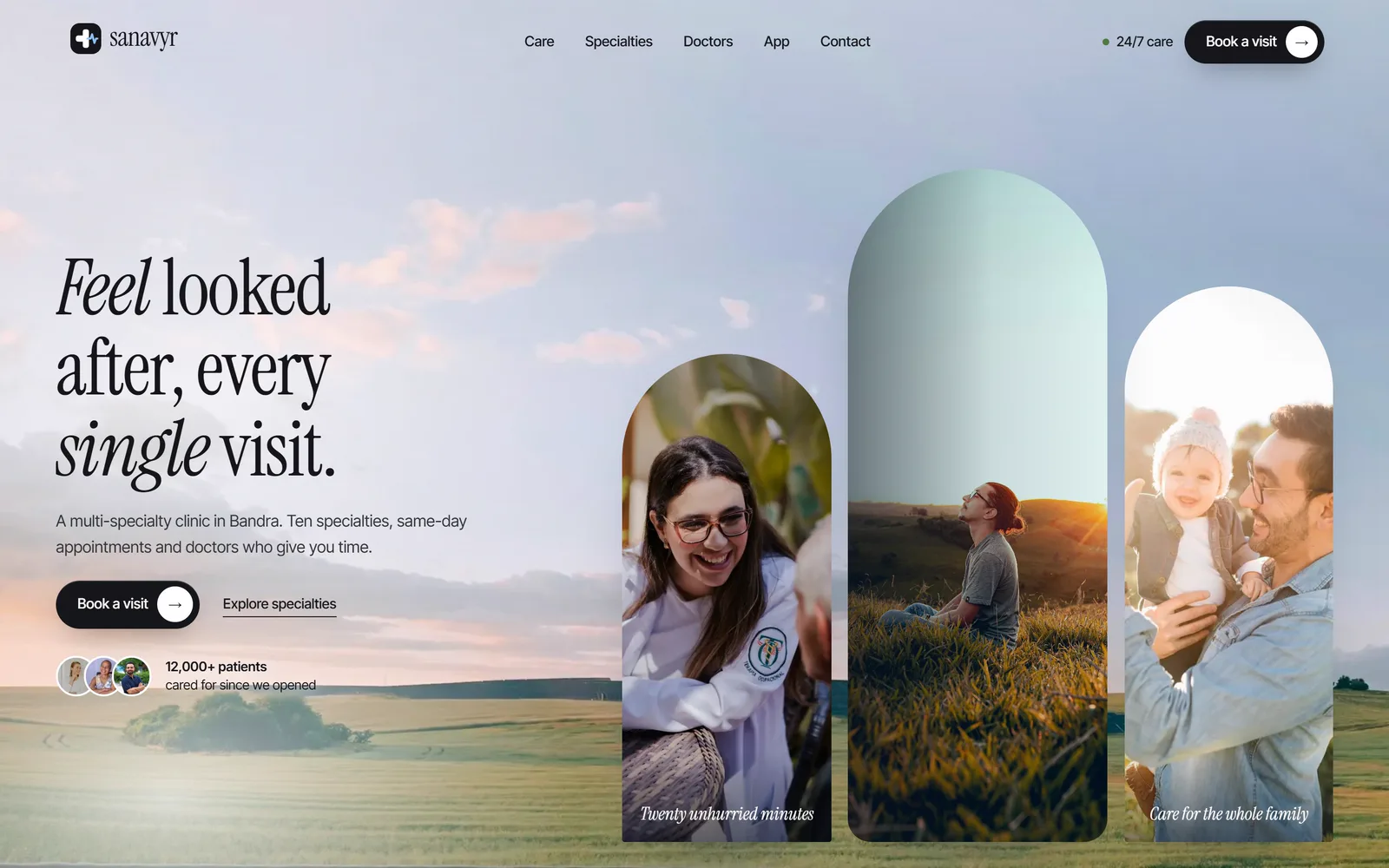
Clinic and dental website example we have shipped.
Tools we use for this
- Next.js
- React
- Tailwind CSS
- GSAP
- Sanity
- Schema.org
- Google Analytics 4
- Google Search Console
- Vercel
FAQ
Dental website design questions
It depends on how many treatment and location pages you need, whether we write the copy, how booking works and whether you are moving from an old site. A focused single-location practice is a smaller project than a multi-site group with clinician profiles and a custom booking flow. We give a fixed quote after a short scoping call, and the start a project form lets you pick a budget range so the first conversation is about the right size of site.
A clear Book a visit button on every page, a page for each treatment, clinician profiles with qualifications, new patient information, opening hours, a map, parking and accessibility details, and honest answers to the questions anxious patients ask. Add reviews you have permission to use, insurance or finance information if you offer it, and a clear route for emergencies. Each treatment page should be written for the search a patient actually types, because those pages do most of the ranking.
Look at practice sites they have built and open them on your own phone. Check that booking is one tap away, that pages load quickly and that treatment pages read like a dentist checked them rather than a template filled them. Ask who writes the copy, who handles local SEO and the Google Business Profile, whether you will own the site and its accounts, and what happens after launch. A good dental website design agency asks about your patients before it talks about colours.
Clarity and calm. A patient should understand within seconds what you treat, who will see them, where you are and how to book. Good medical website design uses plain language over jargon, real photos over stock, readable type, strong contrast and large tap targets for older patients, and fast pages on mobile. It is also careful: no promises about outcomes, and a clear route for urgent cases so nobody waits on a contact form when they should be calling.
Yes. The profile gets you into the map pack, but most patients click through to the website before they book, and Google uses the site to understand what you actually offer. A profile with no strong site behind it tends to rank for your practice name and little else. The two work best together: the profile carries reviews, hours and directions, while the site carries treatment pages, clinician details and the booking flow.
Start with a complete Google Business Profile: the right primary category, accurate hours, real photos and the same name, address and phone as your website. Build a page for each treatment you want to be found for, with a clear title and local detail. Add structured data, keep the site fast on phones and ask happy patients for reviews after each visit. Local rankings build over months, so begin with the treatments that matter most to the practice.
Yes. If you already use online booking software, we link to it or embed it so patients can choose a time without calling. If you do not, we build a short request form that sends the treatment, preferred times and contact details to your front desk. On a clinic with several specialties, the booking button can start in the right department, so a patient is never asked the same question twice and reception spends less time sorting enquiries.
An AI voice agent that answers the phone when your team cannot: after hours, over lunch or when every line is busy. It can answer common questions about hours, location and treatments, book or move appointments in your calendar, and hand anything clinical or urgent to a person. We build it as a separate piece of work from the website, so you can add one at launch or later. Our AI voice agents page explains how they work in more detail.
A marketing website should hold as little patient information as possible. We serve every page over HTTPS, keep forms short, send enquiries to secure inboxes rather than storing them on the site, and leave clinical records in your practice management system where they belong. Privacy rules differ by country, such as HIPAA in the US and UK GDPR in Britain, so we agree which ones apply to your practice at the start and design the forms around them.
Yes. We crawl the current site, map every old URL to its new page with permanent redirects, and carry over titles, descriptions and structured data. Treatment pages that already rank are kept and improved rather than rewritten from nothing. After launch we watch Search Console for crawl errors and fix them quickly. A careful move protects the visibility the practice has built, and a faster, clearer site gives it room to grow.