

Interior Designer Website Design for Studios That Sell on Atmosphere
Portfolio websites for interior designers, architects and design studios: big imagery, editorial type and a clear route from a project someone admires to a consultation.
A good fit if
- Your best projects live on Instagram, not on your own site
- The site is a template you bought when you started the studio
- Enquiries arrive with no budget, location or scope
- You have moved upmarket and the website has not followed
Interior work sells on atmosphere. A prospective client should feel the rooms before they read a word. Then they need to see how you work, what kind of projects you take on and how to start a conversation. A good interior design website does those things in that order.
Portfolio
An interior designer website portfolio that does the selling
The project pages carry the site. Everything else supports them.
Full-bleed project stories
Each project told as a sequence: the brief, the space, the details, the finished rooms. Not a grid of forty thumbnails.
Galleries at full quality, loaded fast
Large images served at the right size for each screen in modern formats, so the work looks sharp without a slow load.
Filters by type of work
Residential, commercial, hospitality, single rooms or full renovations, so a client finds projects like their own.
Before and after
Where you have them, side-by-side or slider comparisons that show what you changed, not only how the room looks now.
Credits and collaborators
Photographers, architects and makers credited properly. It is good manners, and it earns links back to your site.
What we build
Interior designer website design beyond the portfolio
A studio site has to explain how you work and quietly filter who gets in touch.
Services and process
Service pillars, such as residential architecture, interior curation or commercial concepts, and a plain account of how a project runs from first visit to install.
A studio philosophy
A section that says what you believe about space, so the right clients recognise themselves and the wrong ones move on.
An enquiry form that qualifies
Project type, location, timing and budget band, so consultation time goes to the projects you want.
Press and publications
Features and published projects presented quietly, where a careful client will look for them.
A journal
Project notes, material guides and room ideas that give Google fresh pages to rank and give clients a reason to return.
Brand identity
Logo, type and colour designed alongside the site when the studio is ready for a new identity.
Search
Getting an interior design website found on Google
Clients search by area and by type of project. Most studio sites rank for their own name and nothing else.
Project pages written to rank
Titles and text like 'Victorian townhouse renovation' or 'boutique hotel lobby design', instead of 'Project 07'.
Service and area pages
A page for each service and each area you want work in, with projects from that area as proof.
A Google Business Profile for the studio
The correct category, your service area, photos of finished projects and reviews from past clients.
Image search
Descriptive file names, alt text and structured data, so your work can surface in Google Images, where many clients start looking.
Speed despite the photography
Pre-rendered pages and properly sized images keep Core Web Vitals healthy on an image-heavy site.
How it runs
How we design an interior design website
- 01
Edit the work
Choose the projects that represent the work you want more of, and the order to show them in.
- 02
Design the project page
The template that carries most of the site is designed first, with your real photography.
- 03
Build with motion
Scroll motion and transitions that feel like walking through a finished space, kept light enough for phones.
- 04
Launch and hand over
A CMS for adding projects, analytics, Search Console and your Google Business Profile brought up to date.
Cost
How much does an interior design website cost?
The cost of an interior designer website depends on the number of projects, the motion and who writes the words. We quote a fixed price after a short call, and these are the things that move it.
Get a fixed quote→| What moves the price | Why |
|---|---|
| Number of projects at launch | Six well-told projects can be enough to launch. Thirty means more layout and image preparation. |
| Template or bespoke project pages | A flexible project template is quicker than designing each story one by one. |
| Motion and interaction | Cinematic scroll, smooth scrolling and page transitions add design and build time. |
| Brand identity | A new logo and visual identity is scoped as its own stage before the site. |
| Copywriting | Project descriptions and service pages written by us are scoped separately from the build. |
| CMS and journal | A CMS for projects and articles adds setup time now and saves developer time every month after. |
Live proof
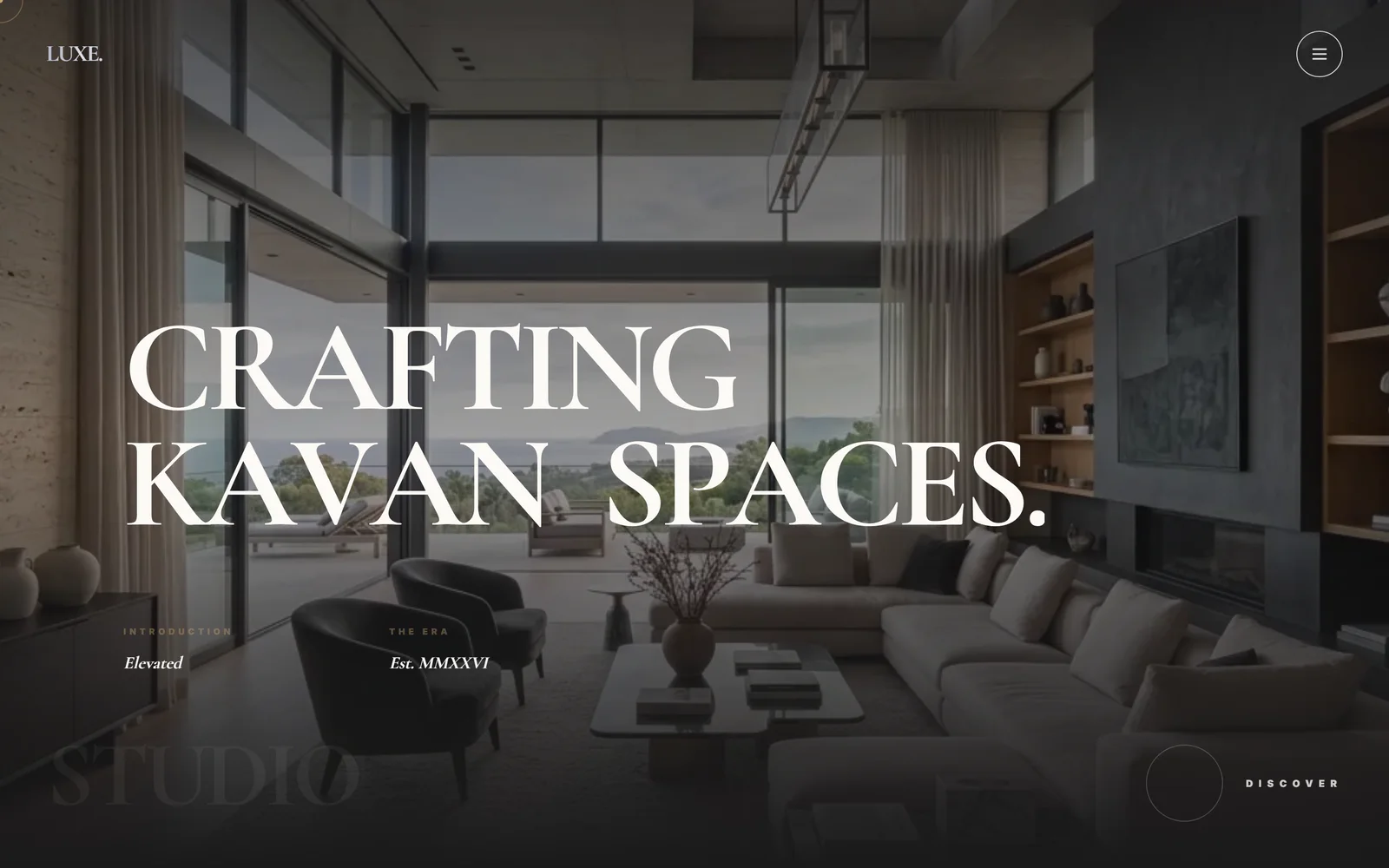
Interior designer website example we have shipped.
Tools we use for this
- Next.js
- React
- GSAP
- Lenis
- Tailwind CSS
- Sanity
- Figma
- Vercel
FAQ
Interior designer website design questions
It depends on how many projects you launch with, whether each project page is bespoke or built from a flexible template, how much motion you want, and whether we write the copy or design a new brand alongside it. A studio with six strong projects and an existing identity is a smaller job than a full rebrand with thirty projects and a journal. We give a fixed quote after a short call, and you can pick a budget range on the start a project form.
A portfolio of your best projects told as stories, a clear list of services, a short account of how you work from first visit to install, a studio philosophy or about page, and an enquiry form that asks for project type, location, timing and budget. Add press features if you have them, a journal if you will keep it going, and contact details with your service area. Every page should leave room for the photography.
The strongest ones let the rooms speak: full-bleed images, very little text above the fold and a pace that feels like moving through a house. Our own example is Luxe Interiors, a studio site with editorial typography and generous space, cinematic scroll motion through full-bleed interiors, service pillars for residential architecture, interior curation and commercial concepts, and a philosophy section that tells the studio's story.
Fewer than you think. Six to ten strong projects, each told properly with a brief, process shots and finished rooms, persuade better than forty thumbnails. Choose work that matches the clients you want next, not simply your most recent jobs. If you work across residential and commercial, group projects so each kind of client sees relevant work first. You can always add more projects later through the CMS.
A builder template works when you are starting out and need a portfolio online quickly. It starts to cost you when the site looks like every other studio on the same template, loads slowly under heavy photography, or ranks for nothing beyond your name. A designer builds the site around your work and your clients, with motion, image handling and SEO a template does not give you. Decide based on the size of projects you want to win.
Yes, if you want larger projects. Instagram is good for discovery, but clients commissioning a full renovation want to see complete projects, understand your process and check you are a real studio before they get in touch. Google also cannot rank an Instagram grid for 'interior designer for townhouse renovation'. Use Instagram to bring people in and the website to explain, qualify and convert them.
By making the right clients feel at home and giving them an easy next step. That means project pages written for the searches clients actually make, a Google Business Profile with photos of finished work, and an enquiry form that is short but asks the questions you need. Follow up quickly and ask finished clients for reviews. Over time, the journal and project pages bring in search traffic that referrals alone cannot.
Most studios do not publish fees, and that is fine. What helps is a budget field on the enquiry form, or a line that says the size of projects you usually take on. It saves you consultations with clients who were never a fit and tells the right clients they are in the right place. If you offer fixed-fee services, such as a single-room design package, show those clearly.
Yes. We set up a content editor with a project template, so you upload photos, write the story and publish without touching code. Images are resized and compressed automatically, so the site stays fast no matter how many projects you add. If you would prefer us to handle it, a monthly retainer covers new projects, journal posts and small design changes, and we reply within one business day.
Yes. Kavion is a small senior team based in India, working remotely with studios and businesses in the US, UK, Canada, Australia and India. The same people design and build your site, with no account managers or juniors in between. We plan overlap with your working day for reviews, share preview links you can click through on your own phone, and reply within one business day.