
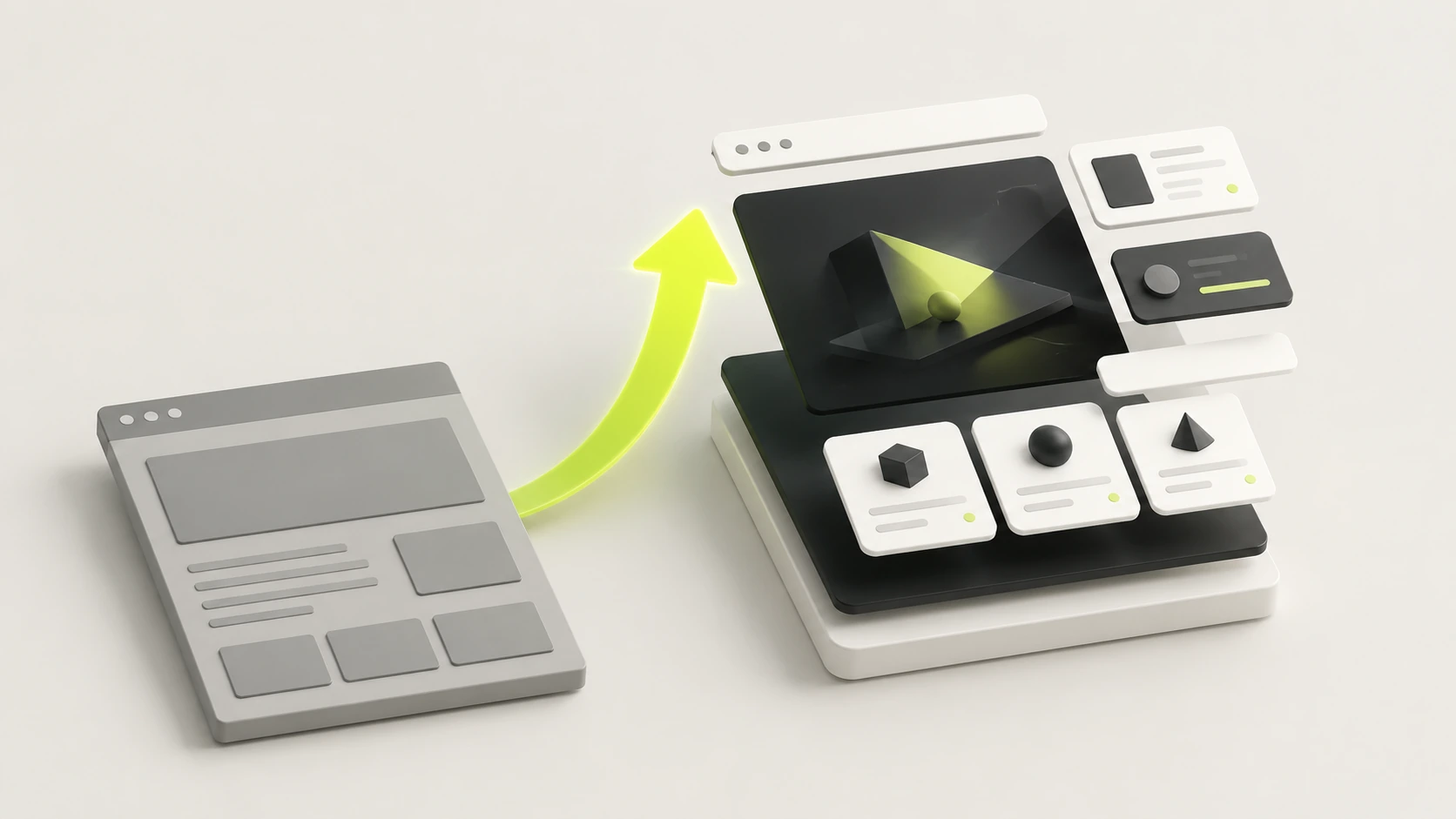
Your website is often the first impression a customer gets, and a slow, dated one costs you business before they ever contact you. Here is what an outdated site quietly loses you, and what a modern redesign actually fixes.
For most businesses the website is the first real impression a customer gets, and often the deciding one. If it loads slowly, looks dated, or is awkward on a phone, people leave before they ever read a word about what you do, and you never even know it happened. A modern redesign is not about chasing trends. It is about turning a site that quietly loses business into one that earns it.
The real cost of an outdated website
An old website rarely fails loudly. It just underperforms, every day, in ways that do not show up until you look. Visitors bounce because the page is slow. Phones show a broken layout. The design signals that the business behind it is not quite current, so the enquiry goes to a competitor whose site felt sharper. None of it is dramatic, and all of it adds up.
The key shift in thinking is this: a website is a sales tool that works around the clock, not a digital brochure you build once and forget. Judged that way, a dated site is not neutral. It is actively costing you the customers it fails to convert.
Signs your website is losing you business
You do not need analytics to spot most of these. Walk through your own site as a first-time customer would and look for:
- It takes more than a couple of seconds to load, especially on mobile data.
- It looks or behaves badly on a phone, where most of your visitors actually are.
- The design looks several years old next to your competitors.
- It is not obvious what to do next: no clear button, no easy way to enquire or book.
- Traffic comes in but almost no one contacts you.
- It is slow or impossible to update, so the content has gone stale.
Speed is the first thing a customer feels
Before anyone judges your design or reads your offer, they feel how fast the page responds. A slow site reads as unprofessional and untrustworthy even when the business is neither, and most people simply leave rather than wait. This is not a hunch: Google measures it directly through Core Web Vitals, a set of real-world speed and stability scores that feed into how you rank in search.
So speed is doing two jobs at once. It decides how many visitors stay long enough to convert, and it influences whether Google shows you to new visitors at all. A fast site wins on both; a slow one loses on both.
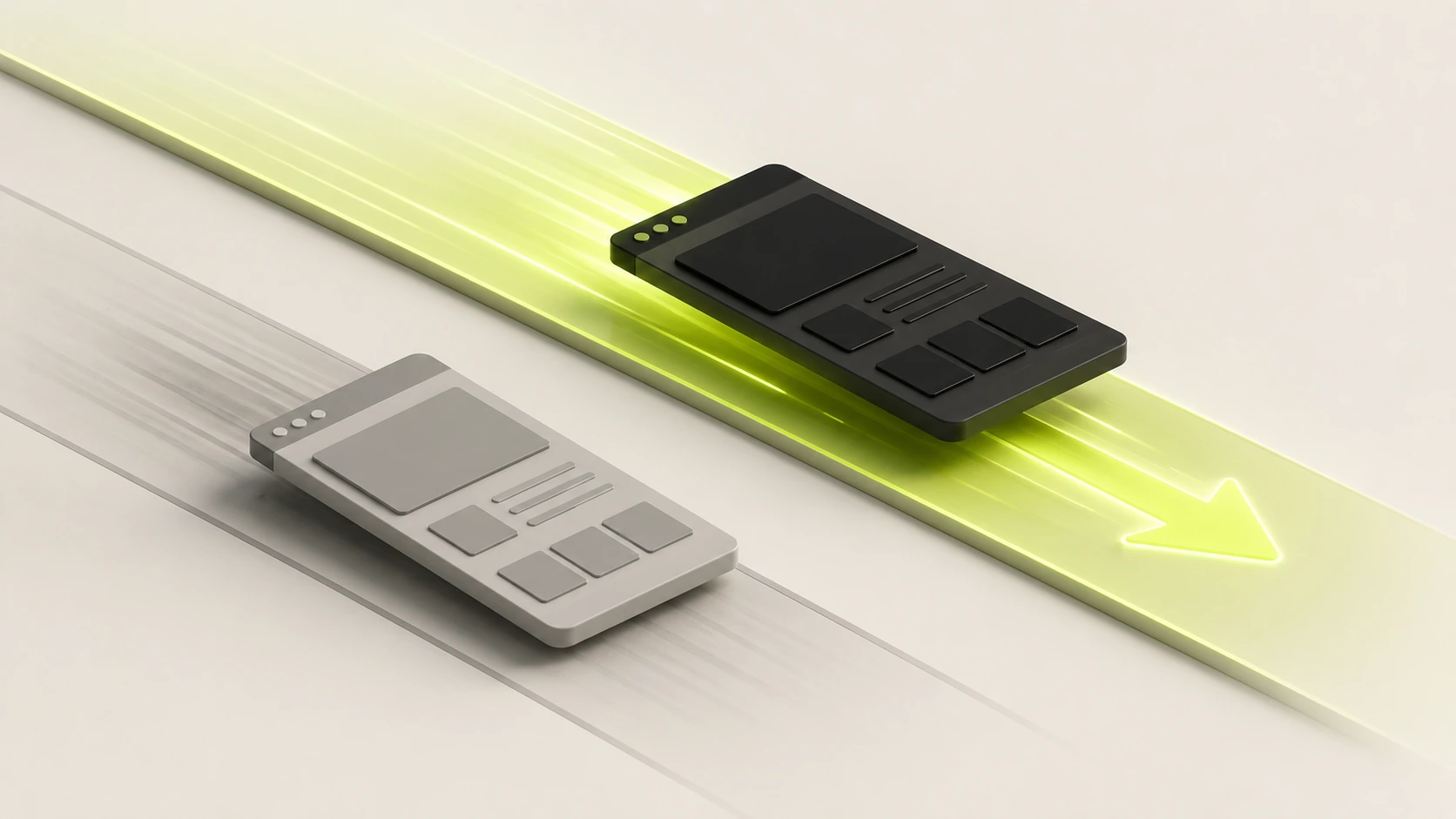
Speed is a feature, not a detail
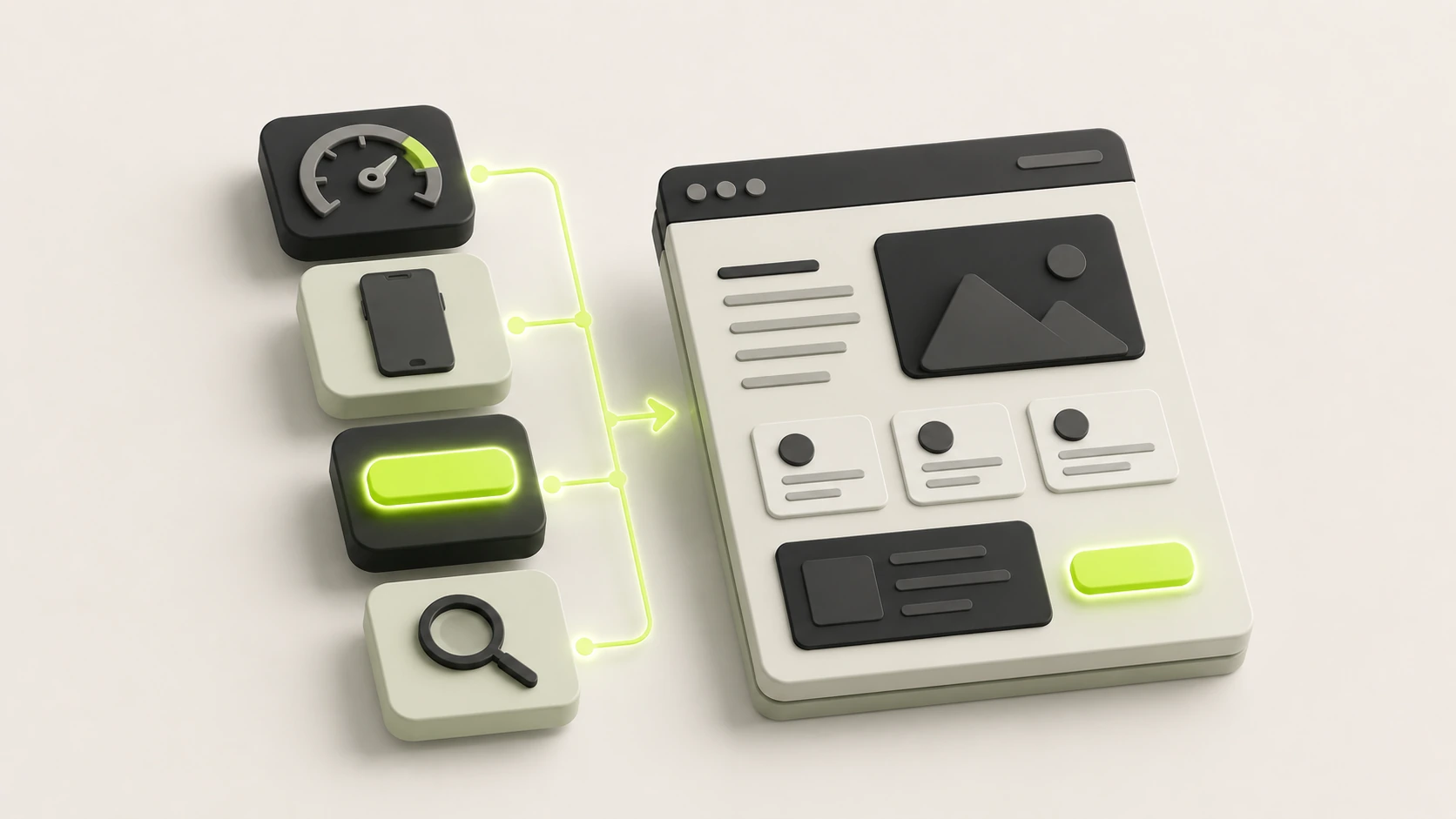
Visitors feel load time before anything else, and Google scores it through Core Web Vitals. A fast site keeps more of the people you already attract and helps you rank for new ones. A slow site quietly loses on both.
What a slow, dated site actually costs
It helps to name what each weakness costs in plain business terms:
| Symptom | What it quietly costs you |
|---|---|
| Slow load time | Visitors leave before the page appears; lower rankings |
| Poor on mobile | You lose the majority of visitors, who are on phones |
| Dated design | Lower trust, so enquiries go to a sharper-looking rival |
| No clear call to action | Interested visitors leave without contacting you |
| Hard to update | Content goes stale and the site drifts out of date |
Design and motion that guide, not decorate
A modern site is not just prettier. Good design does a job: it leads the eye down the page in the right order, makes the next step obvious, and builds enough trust that a visitor is willing to act. Thoughtful motion is part of that. Done well, subtle animation draws attention to what matters, makes an interface feel considered and premium, and reassures people they are dealing with a serious business.
The discipline is knowing when to stop. Motion should guide, never get in the way, and it must never come at the cost of speed. The goal is an interface that feels alive and effortless on every device, not a showreel that takes five seconds to load.
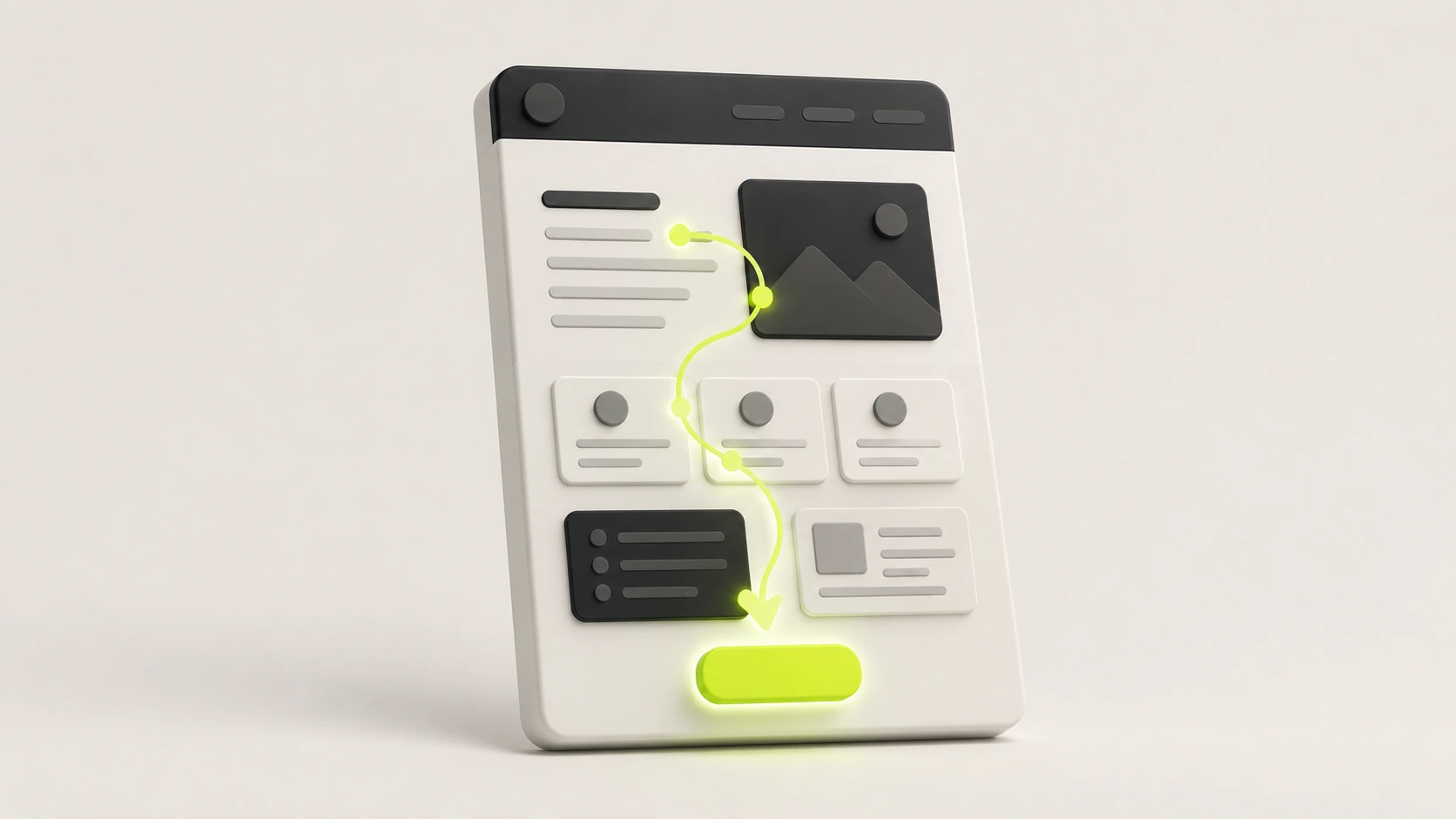
Design should lead to the action
A good layout guides the eye to the one thing you want a visitor to do, and subtle motion reinforces it. Decoration for its own sake just adds weight. The craft is in restraint: alive and premium, never slow.
“Motion should make the next step obvious, not show off. The moment an animation costs you speed, it is costing you customers.”
Kavan Gami, Founder and Full Stack Developer
Custom build vs template vs page builder
When you redesign, you are really choosing how the site is built. Each route trades off speed, flexibility and cost differently:
| Approach | Best for | Trade-off |
|---|---|---|
| Template / theme | The smallest budgets and simplest sites | Generic look, limited control, often slower |
| Page builder | Quick edits by non-technical owners | Bloated code that can hurt speed and Core Web Vitals |
| Custom build (React / Next.js) | Businesses that want speed, a distinct brand and room to grow | Higher upfront investment, done by specialists |
A custom build with a modern framework tends to win where the website genuinely matters to the business, because it is faster, easier to make distinctive, and built to grow with you rather than fight you later.
What a modern website actually includes
Whatever the build route, a redesign worth paying for should deliver these as standard, not as extras:
- Fast loading and green Core Web Vitals on real devices.
- A mobile-first layout that works perfectly on any screen.
- A clear path to the one action you want: enquire, call or book.
- Clean, accessible design that reads as current and trustworthy.
- SEO fundamentals built in so you can be found on Google.
- An easy way to update content without a developer for every change.
- Analytics and tracking so you can see what is working.
How much does a website redesign cost, and how long?
Cost depends on the size of the site and who builds it. As a rough 2026 guide:
| Option | Typical cost (USD) |
|---|---|
| DIY builder (your time plus a subscription) | $0 to ~$500 + monthly fees |
| Freelancer | ~$1,000 to $8,000 |
| Studio / agency (custom, integrated) | ~$5,000 to $30,000+ |
On timing, a focused redesign usually takes a few weeks to a couple of months depending on scope. The better way to judge it is against return: if a faster, clearer site converts even a small share more of the visitors you already get into enquiries, it pays for itself and then keeps paying.
Do you need a full redesign or a refresh?
Not every site needs to be rebuilt. If the foundations are sound and it is only the look that has aged, a refresh of design, speed and content can be enough. If it is slow, painful on mobile, hard to update, or simply not built for how the business works now, a full redesign is the honest answer, because patching a weak foundation rarely lasts. The right call comes from looking at what is actually holding the site back, not from rebuilding for its own sake.
Refresh or rebuild: pick by the constraint
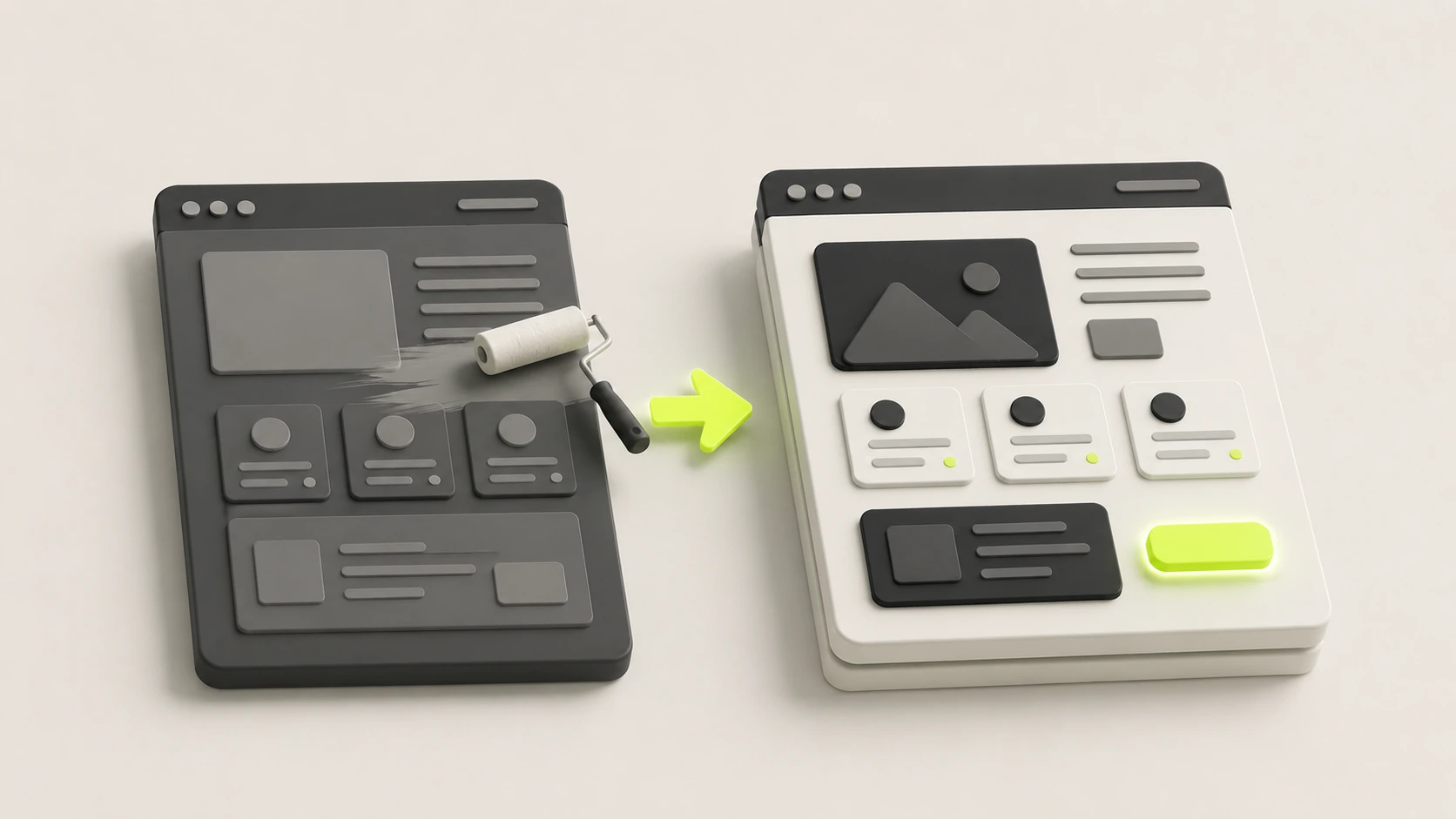
If only the look has aged and the foundations are sound, a refresh can be enough. If the site is slow, weak on mobile or fights every update, a full rebuild lasts longer than patching a weak base.
The bottom line
Your website works every hour of every day, either winning business or quietly losing it. A modern redesign, one that is genuinely fast, clear on mobile, and designed to lead visitors to act, turns more of the attention you already earn into real enquiries. If you would rather have that built properly, with performance and motion handled by the same senior team that designs it, Kavion Solutions builds and ships exactly this kind of site end to end.
FAQ
Frequently asked questions
If it loads slowly, works badly on mobile, looks dated next to competitors, is hard to update, or gets traffic but few enquiries, it is likely costing you business and is due a redesign. If only the look has aged and the foundations are sound, a lighter refresh may be enough.
Speed is the first thing a visitor feels, and most people leave rather than wait for a slow page. Google also measures it through Core Web Vitals, which affect your search rankings, so speed influences both how many visitors convert and whether you are found at all.
For a business where the website really matters, usually yes. Custom builds with modern frameworks like Next.js tend to be faster, easier to make distinctive, and built to grow. Templates and page builders are cheaper and quicker but can be generic and heavier, which can hurt speed.
Roughly from near-free with a DIY builder plus subscription, to about $1,000 to $8,000 with a freelancer, or around $5,000 to $30,000 or more with a studio for a custom, integrated build. The right spend depends on the site's size and how much the website drives your business.
A focused redesign typically takes a few weeks to a couple of months, depending on the number of pages, the amount of content, and how custom the build is. Cutting scope to what actually moves enquiries keeps it fast.
Written by
Founder of Kavion Solutions and a full stack developer working across Node, PostgreSQL, React, Next.js and GSAP. Builds fast, cinematic websites where design meets engineering.